


Windows 10 Support Has Ended. What's Next?
The Windows 10 Extended Security Updates (ESU) program has rolled out following Microsoft officially ending support for Windows 10 on October 14, 2025. Organizations still running Windows 10 devices are no longer receiving standard security updates, bug fixes, or technical support from Microsoft.
For many businesses, migrating every device to Windows 11 before the deadline wasn’t realistic. Hardware limitations, application dependencies, budget constraints, and operational priorities have left many organizations with Windows 10 systems that are still critical to day-to-day operations.
The challenge is that every month without protection increases security risk. Since Windows 10 reached end of support, Microsoft has already released six rounds of security updates through the Extended Security Updates (ESU) program. Devices that are not enrolled have missed every one of those critical patches.
Table of Contents
- Windows 10 Support Has Ended: What Businesses Need to Know
- New Urgency Factors at a Glance
- A New Security Risk Is Approaching in 2026
- What Is Windows 10 ESU?
- Why Organizations Should Act Before October 2026
- ESU Program Highlights
- How Managed Solution Can Help
- Enroll Now to Secure Windows 10 Devices and Save
New Urgency Factors At a Glance
Secure Boot certificate expiration in June 2026
2011-era root certificates expire, and unpatched/non-ESU devices risk boot failures. This is a significant new risk angle.
Year 1 Pricing Window Closes October 13, 2026
The window to get Year 1 pricing is closing. Clients who wait and enter in Year 2 must pay Year 1 retroactively ($61 + $122 = $183/device minimum).
ESU is actively delivering patches
Six monthly security updates have shipped since October 2025. Non-enrolled devices have missed all of them.
A New Security Risk Is Approaching in 2026
Beyond missing security updates, organizations face another important deadline.
Beginning in June 2026, Microsoft’s original 2011 Secure Boot certificates start to expire. These certificates help verify that systems start securely and have not been tampered with during the boot process.
Devices that have not received the required certificate updates may experience startup validation issues and could lose important Secure Boot protections. These updates are being delivered through Microsoft’s ESU program.
Unlike many security advisories, this is a hard cryptographic deadline. Organizations that delay action may find themselves dealing with more than just unpatched vulnerabilities.
What Is Windows 10 ESU?
Microsoft’s Extended Security Updates (ESU) program provides continued security protection for Windows 10 devices after end of support.
ESU is designed to help organizations maintain security and compliance while they complete their migration to Windows 11 or modernize legacy systems that cannot yet be upgraded.
With Windows 10 ESU, organizations receive:
- Critical and Important security updates
- Ongoing vulnerability remediation
- Security-related support from Microsoft
- Up to 3 additional years of protection through October 2028
- Access to previously released ESU security updates upon enrollment
For businesses that need more time to complete their Windows 11 transition, ESU serves as a secure bridge rather than leaving systems exposed.
Why Organizations Should Act Before October 2026
Many businesses assume they can wait until they need ESU coverage. However, Microsoft’s pricing model creates a significant financial incentive to enroll sooner rather than later.
Year 1 of the ESU program ends on October 13, 2026. After that date, organizations entering the program must purchase prior years of coverage before receiving current-year protection.
This means delaying enrollment can dramatically increase costs
ESU Program Highlights
- Up to 3 years of extended protection (through October 2028)
- Critical and important security updates
- Technical support for security-related issues
- Six months of security patches already delivered to enrolled devices, retroactively available upon enrollment
Windows 10 ESU Pricing
ESU licenses are priced per device with annual coverage periods:
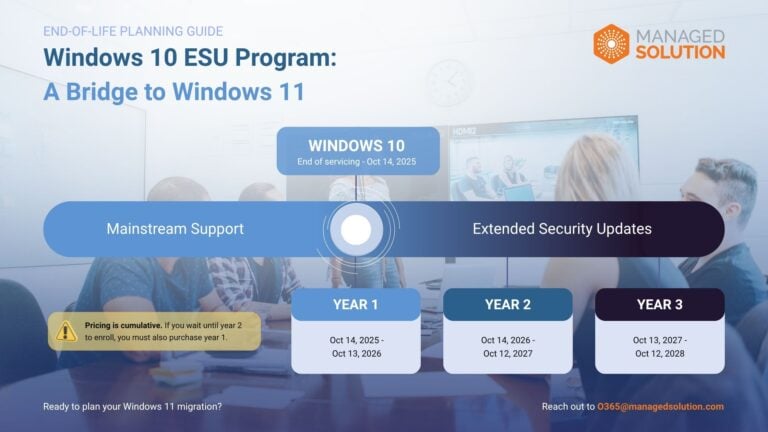
- Year 1 (Oct 15, 2025 – Oct 13, 2026): $61/device
- Year 2 (Oct 14, 2026 – Oct 12, 2027): $122/device
- Year 3 (Oct 13, 2027 – Oct 12, 2028): $244/device
Important: Pricing is cumulative.
Organizations that wait until Year 2 cannot simply purchase Year 2 coverage. They must also purchase Year 1 coverage retroactively.
As a result:
- Year 1 enrollment: $61 per device
- Year 2 enrollment: $183 per device ($61 + $122)
- Year 3 enrollment: $427 per device ($61 + $122 + $244)
Cost reduction here therefore boils down to proactive enrollment, as waiting will only increase them. Beyond proactive enrollment, you can reach out to our team o365@managedsolution.com for a quote with your discounted pricing.
How Managed Solution Can Help
Navigating Microsoft’s licensing requirements while planning a Windows 11 migration can be challenging. Managed Solution helps organizations evaluate their environment, identify systems that require extended protection, and deploy ESU licenses quickly and correctly.
Whether you’re:
- Migrating to Windows 11
- Supporting legacy applications that require Windows 10
- Managing hardware that isn’t yet upgrade-ready
- Reducing cybersecurity risk during a transition period
Our Windows 11 migration support can help you create a practical roadmap that balances security, compliance, and budget considerations.
Enroll Now to Secure Windows 10 Devices and Save
The combination of missed security updates, rising cyber threats, and the upcoming Secure Boot certificate expiration makes 2026 a critical year for organizations still running Windows 10.
If your business isn’t ready to complete its Windows 11 migration, now is the time to secure Extended Security Updates before Year 1 pricing expires.
Get a Personalized ESU Assessment
Contact Managed Solution today for a customized quote and Windows 10 risk assessment. We’ll help you determine which devices require ESU coverage, deploy licenses quickly, and avoid unnecessary costs as Year 2 pricing approaches.