


Protecting Innovation While Scaling Clinical Research
How Biotech Companies Can Scale Clinical Research Without Compromising Compliance, Security, or Innovation.
The biotech industry is experiencing unprecedented growth. As clinical research accelerates to address the increasing burden of chronic diseases worldwide, organizations face mounting pressure to bring new therapies to market faster while maintaining regulatory compliance, protecting intellectual property, and supporting global operations.
For many biotech companies, scientific innovation is not the challenge. The real challenge is building the technology infrastructure necessary to support that innovation at scale.
Table of Contents
The Clinical Research Boom Is Driving New Technology Demands
The rising prevalence of chronic conditions, including cancer, cardiovascular disease, autoimmune disorders, and neurological diseases, continues to fuel clinical research activity. As biotech organizations expand research programs, manage larger data sets, and collaborate across multiple geographies, technology becomes a critical business enabler.
From preclinical development through commercialization, biotech companies depend on reliable access to:
- Clinical research databases and data repositories
- Regulatory and government data sources
- Research collaboration platforms
- Electronic quality management systems
- Laboratory information management systems (LIMS)
- Manufacturing and supply chain technologies
- Data analytics and AI-driven research tools
Managing these systems requires more than basic IT support. It requires a strategic technology foundation designed specifically for regulated environments.
The Top 5 IT Challenges in Biotech Today
1. Navigating Regulatory Complexity
One of the most pressing IT challenges in biotech is compliance and regulation. Life sciences organizations operate in an environment where regulatory expectations continue to evolve alongside scientific innovation.
Whether supporting clinical trials, managing quality systems, or preparing for regulatory submissions, technology leaders are increasingly responsible for ensuring that critical systems provide the transparency, traceability, and data integrity required to withstand scrutiny.
Disconnected platforms, manual processes, and inconsistent data management practices can create operational friction that makes it more difficult to demonstrate compliance, respond to audits, and support regulatory reporting requirements.
Maintaining visibility across research, quality, and operational data is therein essential for reducing risk and supporting timely submissions.
For FDA compliance technology plays a critical role in helping biotech companies establish the controls, documentation practices, and reporting capabilities necessary to navigate an increasingly complex regulatory landscape.
2. Protecting Intellectual Property and Research Data
For biotech companies, intellectual property and research data often represent years of investment and the foundation of future growth. As research teams collaborate across locations, partners, and cloud-based platforms, the challenge is no longer simply securing data, but maintaining control over how it is accessed, shared, and protected throughout the organization.
Technology leaders must balance accessibility for researchers with the safeguards required to protect sensitive clinical data, proprietary research, and product development information. Cybersecurity incidents can disrupt operations, trigger increased regulatory oversight, and undermine stakeholder confidence at critical stages of development.
As threat activity continues to target organizations with valuable research assets, biotech companies are placing greater emphasis on identity management, data governance, continuous monitoring, and resilient backup strategies to strengthen their security posture.
3. Ensuring Manufacturing Continuity
As biotech companies move from research and development into commercialization, technology infrastructure becomes increasingly intertwined with manufacturing performance. Downtime that may have been manageable in an earlier growth stage can have far-reaching consequences when production schedules, product availability, and regulatory commitments are involved.
Manufacturing environments rely on a complex ecosystem of systems, applications, and connected processes that must remain available and secure. Even minor disruptions can create ripple effects across supply chains, quality operations, inventory management, and production planning.
For technology leaders, building resilience through proactive monitoring, disaster recovery planning, and infrastructure redundancy helps reduce operational risk while supporting the continuity required for long-term growth.
4. Supporting Rapid Growth and Scaling
Biotech organizations often experience periods of accelerated growth following successful clinical milestones, funding events, strategic partnerships, or acquisitions. While growth creates new opportunities, it can also place significant pressure on technology teams tasked with supporting a larger and more complex organization.
Expanding research operations, onboarding new employees, integrating new technologies, and supporting additional locations can quickly expose limitations in existing infrastructure and security frameworks. At the same time, organizations must maintain the performance, compliance, and reliability expected by researchers, executives, investors, and regulators.
Scalable technology foundations enable biotech companies to respond to changing business demands without sacrificing operational efficiency, security, or user experience.
5. Managing Global Operations
Modern biotech organizations rarely operate within a single geography. Research teams, clinical trial sites, manufacturing facilities, and external partners are often distributed across regions, creating new challenges for technology leaders responsible for maintaining consistency, security, and visibility across the enterprise.
Providing secure access to critical systems and data while accommodating varying regulatory requirements, business processes, and operational needs requires thoughtful governance and infrastructure planning. Organizations must also support real-time collaboration among globally dispersed teams without introducing unnecessary risk or complexity.
Modernized biotech IT management helps ensure that employees, researchers, and partners can work effectively across borders while maintaining the performance, security, and compliance standards the business depends on.
The Business Impact of Technology Gaps
When technology infrastructure fails to keep pace with organizational growth, the consequences extend far beyond IT. Common business impacts of the IT challenges in Biotech include:
Compliance Risk
Inadequate controls can increase exposure to regulatory violations, audit findings, and costly remediation efforts.
Delayed Product Launches
Technology disruptions or compliance issues can slow development timelines and postpone commercialization opportunities.
Lost Productivity
Researchers, clinical teams, and operational staff require reliable access to critical systems and data. Downtime and performance issues directly affect productivity.
Increased Operational Costs
Reactive IT management, security incidents, and inefficient processes often drive higher long-term expenses than proactive investment in resilient infrastructure.
Building a Technology Strategy That Supports Innovation
Biotech leaders need technology partners that understand both the scientific mission and the operational realities of a highly regulated, data-driven industry. As organizations grow, technology must do more than support day-to-day operations. It must provide the foundation for secure research, regulatory readiness, business resilience, and long-term scalability.
Build for Growth Without Adding Complexity
As organizations move from discovery through clinical development and commercialization, technology requirements evolve rapidly. A scalable infrastructure strategy helps ensure new research initiatives, global teams, and expanding data volumes can be supported without creating operational bottlenecks. By aligning infrastructure decisions with long-term business goals, organizations can remain agile while avoiding costly rework down the road.
Protect Critical Data Through a Security-First Approach
Intellectual property, clinical data, and proprietary research are among biotech’s most valuable assets. Effective security strategies focus on protecting these assets while enabling collaboration across researchers, partners, and stakeholders.
A proactive approach to life sciences cybersecurity, governance, and risk management helps strengthen resilience without slowing innovation.
Establish Strong Data Governance
As data volumes continue to grow, many organizations struggle with visibility, accessibility, and control.
Developing a governance framework for managing research and operational data can improve decision-making, support compliance efforts, and help ensure critical information remains protected and readily available to authorized users.
Prioritize Operational Resilience
Research, quality, and manufacturing operations all depend on reliable technology.
Building resilience into critical systems through redundancy, recovery planning, and proactive monitoring helps reduce downtime and supports business continuity when disruptions occur.
Support Compliance Through Better Visibility and Control
Regulatory expectations continue to evolve, making governance and documentation increasingly important.
Organizations that establish consistent processes for managing systems, access, and data are often better positioned to demonstrate Biotech compliance and respond confidently to audits, inspections, and changing requirements.
Enable Secure Collaboration Across the Enterprise
Innovation depends on effective collaboration between research teams, clinical partners, manufacturers, and business stakeholders.
Modern collaboration platforms, paired with the right governance and security controls, can improve productivity while helping organizations maintain control over sensitive information.
Technology as a Strategic Advantage
The most effective technology strategies and IT solutions for Biotech companies are designed to support innovation, not constrain it.
By aligning infrastructure, security, governance, and operational processes with business objectives, biotech organizations can create an environment where researchers focus on discovery, leadership gains greater visibility, and the business is prepared to scale with confidence.
Turning Strategy into Action
Every biotech organization faces a unique set of challenges based on its stage of growth, research focus, regulatory requirements, and operational model. That’s why there is no one-size-fits-all approach to technology.
At Managed Solution, we work alongside biotech leaders to understand where their business is today and where it’s headed tomorrow. Whether the priority is supporting a distributed workforce, strengthening cybersecurity, modernizing infrastructure, improving compliance readiness, or preparing for rapid growth, we help organizations build a technology roadmap that aligns with their business goals.
More importantly, we help execute that strategy. From assessing current environments and identifying gaps to implementing scalable solutions and providing ongoing guidance, our focus is on creating technology ecosystems that help biotech companies innovate with confidence.
The result is a more resilient, secure, and efficient IT environment that supports researchers, operations teams, and business leaders alike, without adding unnecessary complexity.
Success Story: See How Pathway Genomics Did It
Building the right technology foundation can have a significant impact on both day-to-day operations and long-term growth.
When Pathway Genomics needed to support a remote workforce, improve secure collaboration, address HIPAA compliance requirements, and establish a long-term IT strategy, they partnered with Managed Solution for Biotech IT services to modernize their environment and create a more scalable foundation for the future.
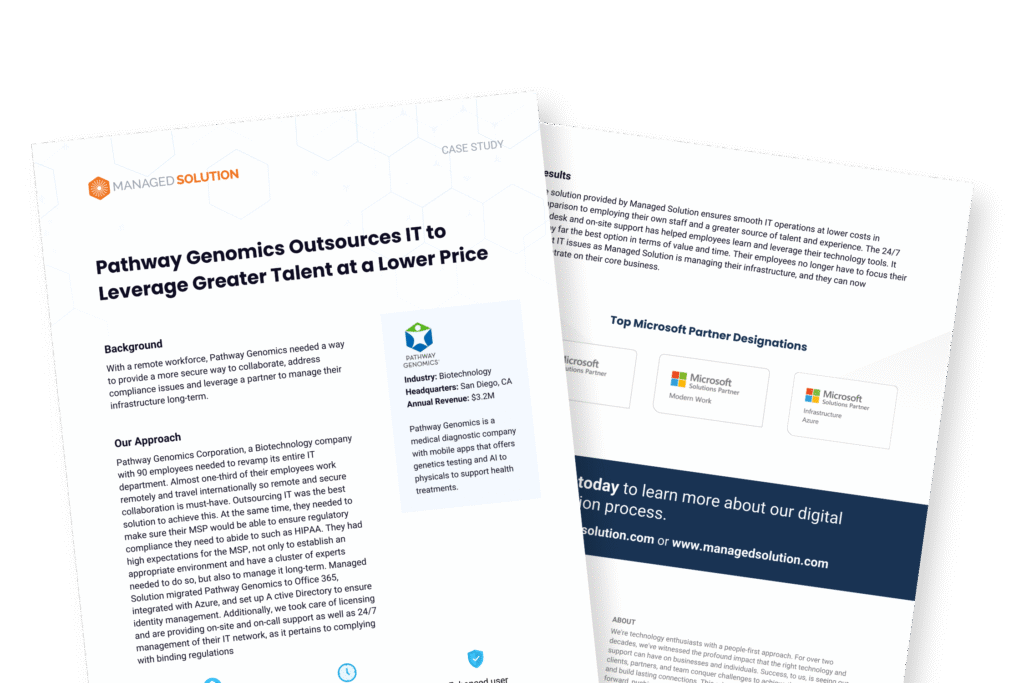
The results included:
- Reduced overall IT spend
- Improved compliance posture
- Enhanced employee experience and productivity
- 24/7 infrastructure management and support
- Greater operational efficiency and scalability
Read the Pathway Genomics case study to see how a biotechnology company transformed its IT environment to support security, compliance, and growth while allowing internal teams to focus on what matters most: advancing innovation.
Protecting Innovation While Supporting Growth
Innovation drives the biotech industry forward, but innovation alone is not enough. Organizations must also create technology environments that can support increasing research demands, evolving regulations, global collaboration, and long-term growth.
Managed IT services for life sciences create secure, reliable IT infrastructures that helps biotech companies reduce risk, improve operational efficiency, and accelerate the path from discovery to commercialization.
Life sciences organizations rely on secure, reliable technology to accelerate innovation and maintain compliance. By strengthening cybersecurity, improving operational visibility, and building resilient infrastructure, biotech companies can protect sensitive research data while creating a foundation for sustainable growth.