


Construction leaders are under constant pressure to deliver projects on time, on budget, and to the highest quality standards. Yet a single equipment failure, safety incident, communication breakdown, or cybersecurity event can quickly derail schedules, increase costs, and impact profitability.
The dominoes fall fast, not because of a lack of expertise, but a lack of bandwidth that’s needed to identify and address issues before they become project risks.
As projects become more complex and teams become increasingly distributed across job sites, offices, subcontractors, and vendors, having the right technology strategy & foundation is essential for maintaining productivity and keeping projects moving forward.
In this blog we’ll explore what that foundation looks like from IT Services for construction to specific tools like Power BI, Microsoft Entra ID and more.
Table of Contents
How Technology Challenges Impact Projects
Consider a hypothetical scenario that may feel familiar.
A project manager receives a call from the owner asking whether the building will be dried before the rainy season begins.
The latest project update suggests everything is on track. But as the project manager starts gathering information, the picture becomes less clear.
The superintendent’s daily reports haven’t been reflected within the scheduling platform. A subcontractor has reported delays that haven’t made it into the latest status update. Financial data lives in a separate system, making it difficult to understand the full impact on the project’s budget and timeline.
What should be a simple question quickly turns into a series of calls, emails, and spreadsheet reviews. Despite the team’s effort and expertise, this lack of visibility stifles the project’s progress and becomes a potential risk to revenue.
What This Looks Like for The IT Department
IT teams are managing help desk requests, supporting job sites, maintaining infrastructure, and responding to cybersecurity threats. While leadership is asking for better reporting, stronger integrations, and greater visibility into project performance, IT often lacks the bandwidth to deliver those improvements.
Because IT teams are so spread thin, they remain focused on keeping critical systems secure and operational instead of building dashboards, connecting systems, or evaluating new technologies that could improve project outcomes.
As projects, users, and technology demands grow, that gap between business needs and IT capacity becomes increasingly difficult to close.
Project Visibility: The Primary Challenge for Modern Construction Firms
The scenario we explored highlights a growing challenge for many construction firms which we’ll be highlighting first: project visibility. Today’s construction projects generate significant amounts of information from scheduling platforms, collaboration tools, financial systems, resource planning applications, field reporting solutions, and project documentation.
Unfortunately, many firms still rely on manual reporting processes and disconnected data sources. When project information is spread across multiple systems, leadership often lacks a complete picture of project health until issues become difficult and expensive to address.
Even with a plethora of platforms designed to support construction firms throughout the builder process, Deloitte reports that a staggering 80% of Construction companies are still lacking in the department of data management and strategy.
This typically leads to challenges such as:
- Limited visibility of project progress
- Delayed reporting from the field
- Manual coordination between teams
- Difficulty identifying schedule and/or budget risks
- Slowed decision-making caused by fragmented data
Data management platforms and tools are no doubt powerful and important for construction firms, but without a strategy they won’t deliver a complete solution.
If a team is struggling with creating a solid data management strategy, it’s important for them to understand why. Is it due to bandwidth? Lack of expertise of certain tools? Getting everyone on board with understanding the root causes is the first step.
Often times seeking guidance with trusted technology partners or consultants can help these firms find and remove the barriers and access the resources they need to optimize their data environment.
Visibility and IT Invincibility with Trusted Technology Partners
Partnering with a technology provider or managed service provider gives construction firms expertise and resources to not only solve the challenges with visibility, but build a streamlined IT environment that bolsters productivity, uptime, security and ultimately profits.
What are Managed IT Services for Construction?
Managed IT Services for Construction encompasses the planning, implementation, management, security and ongoing support across a construction firm’s technology environment.
The primary focus of IT services for modern Construction firms coincides with the current technology challenges they face including visibility, support bandwidth, employee lifecycle management, and security.
Strategic Technology Planning
Managed IT partners help align technology investments with business goals, ensuring systems support long-term growth and profitability. Reliable technology and processes create the stronger foundation construction firms need for successful project delivery.
Improved Operational Efficiency & Reduced Downtime
Reliable technology allows teams to stay focused on project execution rather than troubleshooting system issues. Proactive monitoring helps detect and resolve issues before they impact users, reducing interruptions that can delay projects.
Streamlined Data Management
Construction firms generate data across scheduling platforms, ERP systems, financial applications, field reports, and project documentation. Managed IT partners help connect these systems and create a data strategy that turns fragmented information into actionable insights.
This creates the foundation for business intelligence tools like Power BI (which we’ll explore more in-depth) that can provide leadership with a real-time view of project performance, financial health, and operational trends.
Strengthened Security and Lifecycle Management
Modern identity and device management tools can help organizations control access, secure devices, and protect company information across offices, jobsites, and remote environments.
Microsoft solutions such as Entra ID and Intune can help IT teams manage identities and devices while supporting the flexibility modern construction teams need.
Scalability for Growth
As firms take on larger projects or expand into new markets, managed IT infrastructure can scale alongside business demands.
Having a central team to rely on that understands the technology environment, business goals and how to strategically leverage IT solutions to achieve these goals is key here. With this level of trust and guidance construction firms can streamline their systems while building substantial, and sustainable growth.
An example of this comes from the previously cited Deloitte study that found construction firms could potentially grow their average annual profits by 50% with a solidified data management strategy alone.
Technology Solutions & Service Models for More Profitable Projects
There is no single technology formula for every construction firm. Some organizations need strategic guidance, others need implementation expertise, and some require ongoing operational support. The following solutions demonstrate how construction leaders can address visibility and security challenges while building a technology strategy that supports long-term growth and profitability.
Creating Actionable Insights with Power BI
Remember the project manager trying to determine whether a building would be dried in before the rainy season?
The challenge wasn’t a lack of data, but organization and accessibility.
Power BI helps solve that problem by bringing information from scheduling tools, financial systems, field reports, and operational platforms into a centralized dashboard. Instead of chasing updates through emails, spreadsheets, and phone calls, construction leaders can quickly view project status, budget performance, resource utilization, and potential risks in real time.
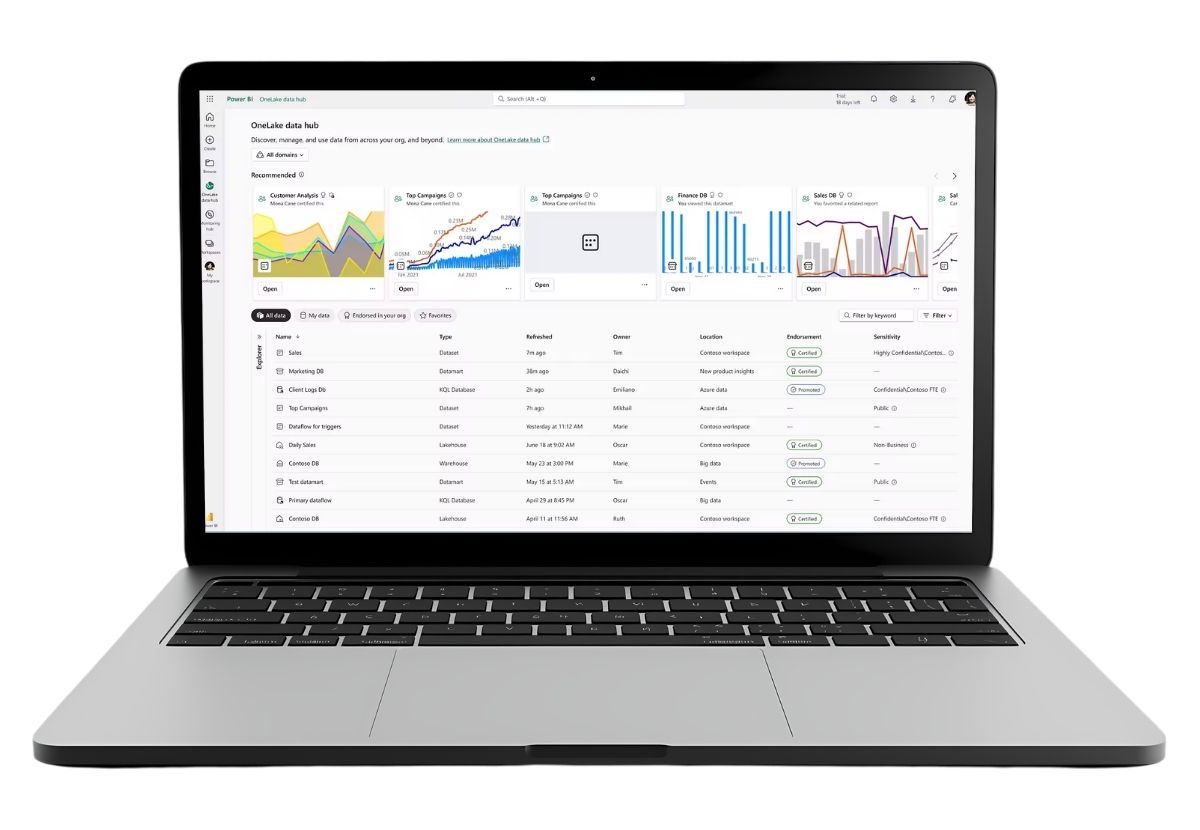
The result is faster decision-making, earlier risk identification, and greater visibility into the factors that impact project profitability.
For IT teams, the challenge is often finding the time and resources to build and maintain reporting solutions while supporting daily operations.
Managed IT services can help alleviate those bandwidth constraints, while partners who combine operational support with specialized Microsoft expertise provide added flexibility through implementation, ongoing management, and strategic guidance tailored to the organization’s needs.
Protecting Critical Project Data with Microsoft Entra ID
Visibility is only valuable if the right people can access that information securely.
Managing access across a distributed workforce, along with the growing number of laptops, tablets, and mobile devices used on and off the jobsite, can be just as challenging as managing company data itself.
Microsoft Entra ID and Intune help address this challenge by securing both identities and devices. Entra ID verifies who is accessing company resources, while Intune helps ensure devices remain compliant, secure, and up to date.
As with data and reporting initiatives, successful identity and device management requires both operational capacity and specialized expertise. Some construction firms need guidance selecting the right solutions.
Others need help implementing and managing them. Working with a Microsoft-focused managed services provider offers the flexibility to combine day-to-day IT support, specialized technology services, and strategic planning into an approach tailored to the organization’s environment, workforce, and long-term goals.
The right partner doesn’t just support today’s needs. They help create a roadmap that can adapt as the business, technology, and project demands continue to evolve.
Building an IT Roadmap to More Profitable Construction Projects
Construction firms don’t become more profitable because of a single dashboard, security platform, or IT investment. Profitability is often the result of having the right technology foundation in place to improve visibility, reduce risk, minimize downtime, and support better decision-making at every stage of a project.
The roadmap often begins with understanding where the biggest barriers exist today. For some organizations, that means improving project visibility and reporting. For others, it means strengthening cybersecurity, modernizing employee and device management, or giving internal IT teams the resources they need to support a growing business.
From there, technology leaders can build a strategy that aligns people, processes, and technology around common business objectives. Managed IT services, business intelligence tools like Power BI, and security solutions like Microsoft Entra ID and Intune are not the destination. They’re tools that help organizations move toward greater efficiency, stronger security, and more informed decision-making.
The most effective approach is one that is tailored to the organization’s unique environment, goals, and growth plans. With the right combination of operational support, specialized expertise, and strategic guidance, construction firms can create a technology roadmap that evolves alongside the business.
When teams have better visibility into project performance, secure access to critical information, reliable technology, and the resources to focus on high-value initiatives, they can spend less time reacting to problems and more time delivering successful projects.
And when projects are delivered more efficiently, with fewer delays, less risk, and better-informed decisions, improved profitability often follows naturally.
Ready to build a technology roadmap for more profitable projects?
Our team can help you evaluate your current environment, identify opportunities for improvement, and develop a strategy that aligns technology investments with your business goals. Click here to chat with an expert and learn more.